Surveying Kansans about Energy and Water Security
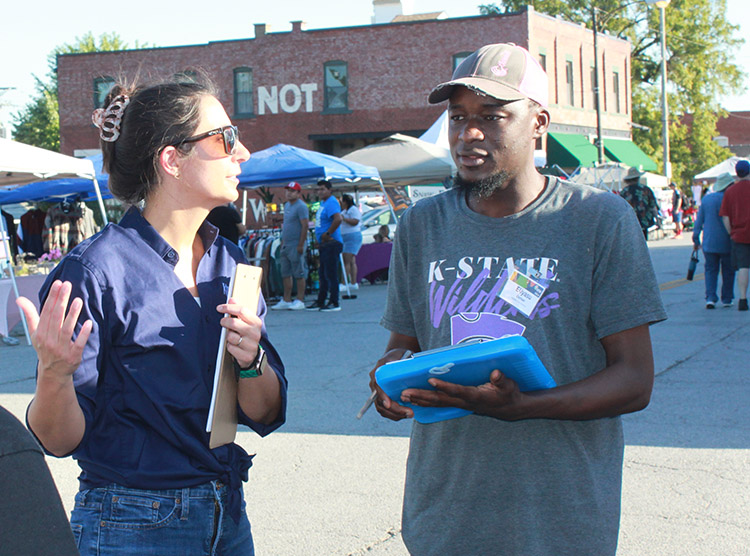
One of the boldest goals of the ARISE project was to survey thousands of Kansans to learn about water and energy security. Collecting and analyzing the data took a couple years — but the results are finally coming in.
Check out these two papers that ARISE researchers gave this month at the AgEcon conference in Denver, Colorado:
- Extreme weather events, community resilience, and energy insecurity in Kansas by EY Osman, JS Bergtold, EJ Sutley, M Graham, A Gaucin, Y Ren, & R. Sharmin.
- Determinants of Willingness-to-Pay to Avoid Water Outage under Extreme Weather Events by Y Ren, J Bergtold, M Gharib, E Osman, E Sutley, & R Sharmin.
One of the most striking findings from the first paper is that nearly a fifth of the survey respondents reported that they struggle with energy insecurity. Moreover, 14% spend a large portion of their income on energy bills.
The second paper estimates how willing Kansas households are to pay to avoid water outages during extreme weather events. The results indicate that the willingness to pay increases with the duration of the water outage and if the outage occurs during winter.
These findings provide important insights for policy makers deciding how to invest in water and energy infrastructure systems. As natural disasters likes floods and storms become increasingly common, local leaders need information like this to ensure their communities can withstand these disasters.
Guiding the research are Kansas State University agricultural economist Jason Bergtold and the University of Kansas civil engineer Elaina Sutley. Several graduate students, a postdoctoral researcher, and an undergraduate contributed as well.
Funding for this research comes from the five-year ARISE initiative, backed by the U.S. National Science Foundation (NSF) Established Program to Stimulate Competitive Research (EPSCoR) and co-funded by the Kansas Board of Regents. The initiative aims to strengthen research excellence in regions historically overlooked for federal investment—and it’s working, with every dollar in EPSCoR funding helping bring in more than double in additional federal research support.