New study reveals infrastructure concerns among Kansas local leaders
A new study led by researchers in the ARISE project uncovers the infrastructure concerns of municipal leaders across Kansas, revealing key differences between rural and urban areas.
As heatwaves, heavy rainfall, high winds, and wildfires fires become more frequent and severe, local officials face tough decisions about how to protect critical infrastructure. People’s lives depend on accessing clean water, safe roads, and electricity, so mitigating threats to these systems from natural disasters is a top priority.
But context matters. Infrastructure systems vary greatly across the state.
The research, published August 3rd in the State and Local Government Review, explores these differences. It was led by Hsi-Chuan Wang, postdoctoral associate at the University of Kansas in collaboration with Rachel Krause, professor of public affairs at KU, and Xiaoheng Wang, assistant professor of public affairs at Wichita State University.
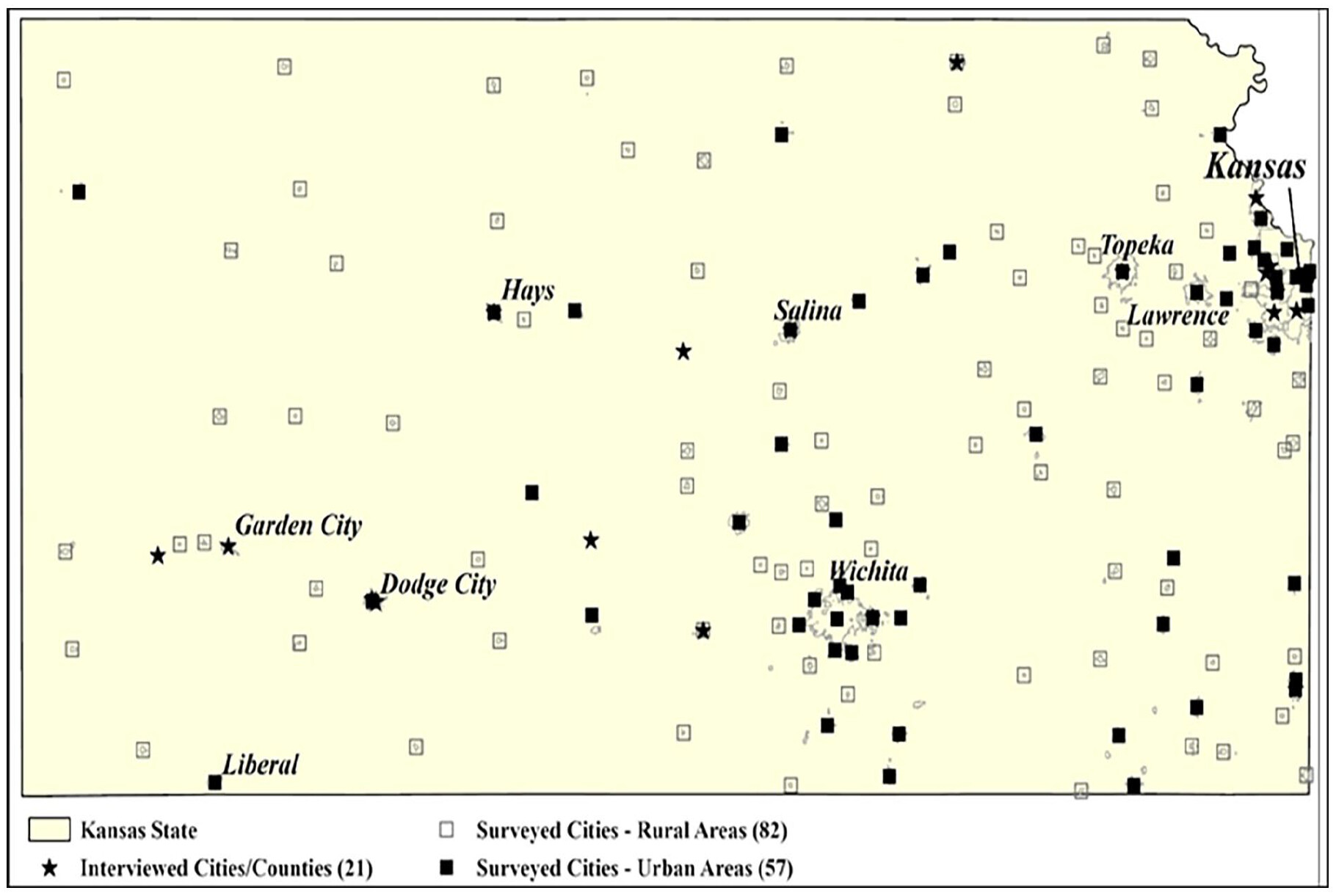
After interviewing 21 local officials and analyzing data from a statewide survey, the researchers uncovered distinct concerns for rural and urban officials.
For example, rural leaders expressed heightened concern for clean water infrastructure, while urban leaders were more concerned about transportation systems and the cascading effects of power outages on traffic and emergency services.
Funding emerged as a common challenge. While most officials were optimistic about fiscal outlook, many thought spending on infrastructure was insufficient. Rural leaders cited systemic obstacles in securing federal funding, whereas urban leaders pointed to external funding successes for large-scale projects.
Workforce issues also surfaced as a shared concern. Rural communities reported a worker shortage, while urban areas struggled with high staff turnover. Both groups noted looming impact of aging and retiring skilled workers on the field.
The authors said that Kansas offers a prime setting for the research. Of the state's 3 million residents, 62% live in just 8 of its 105 counties. In contrast, 37 counties have a density of less than six people per square mile.
The study concludes that effective strategies for infrastructure resilience must account for the unique contexts of rural and urban areas, cautioning against one-size-fits-all approaches. Researchers also suggest that the challenges identified in Kansas are likely to reflect broader national trends.
Funding for this research comes from the five-year ARISE initiative, backed by the U.S. National Science Foundation (NSF) Established Program to Stimulate Competitive Research (EPSCoR) and co-funded by the Kansas Board of Regents. ARISE aims to strengthen research excellence in regions historically overlooked for federal investment—and it’s working, with every dollar in EPSCoR funding helping bring in more than double in additional federal research support.
This work was also supported by the Ministry of Education (Taiwan, R.O.C.) [the Yushan Fellow Program (MOE-113-YSFSL-0005-002-P1) and the Higher Education Sprout Project to the Headquarters of University Advancement at National Cheng Kung University].
Read the full publication
Wang, H.-C., Krause, R. M., & Wang, X. (2025). Concerns and Collaboration Around Infrastructure Resilience in Rural and Urban Places. State and Local Government Review. https://doi.org/10.1177/0160323X251353247