Educator Spotlight: Curiosity Champion Mary Patterson Creates Opportunity for Kansas City Youth
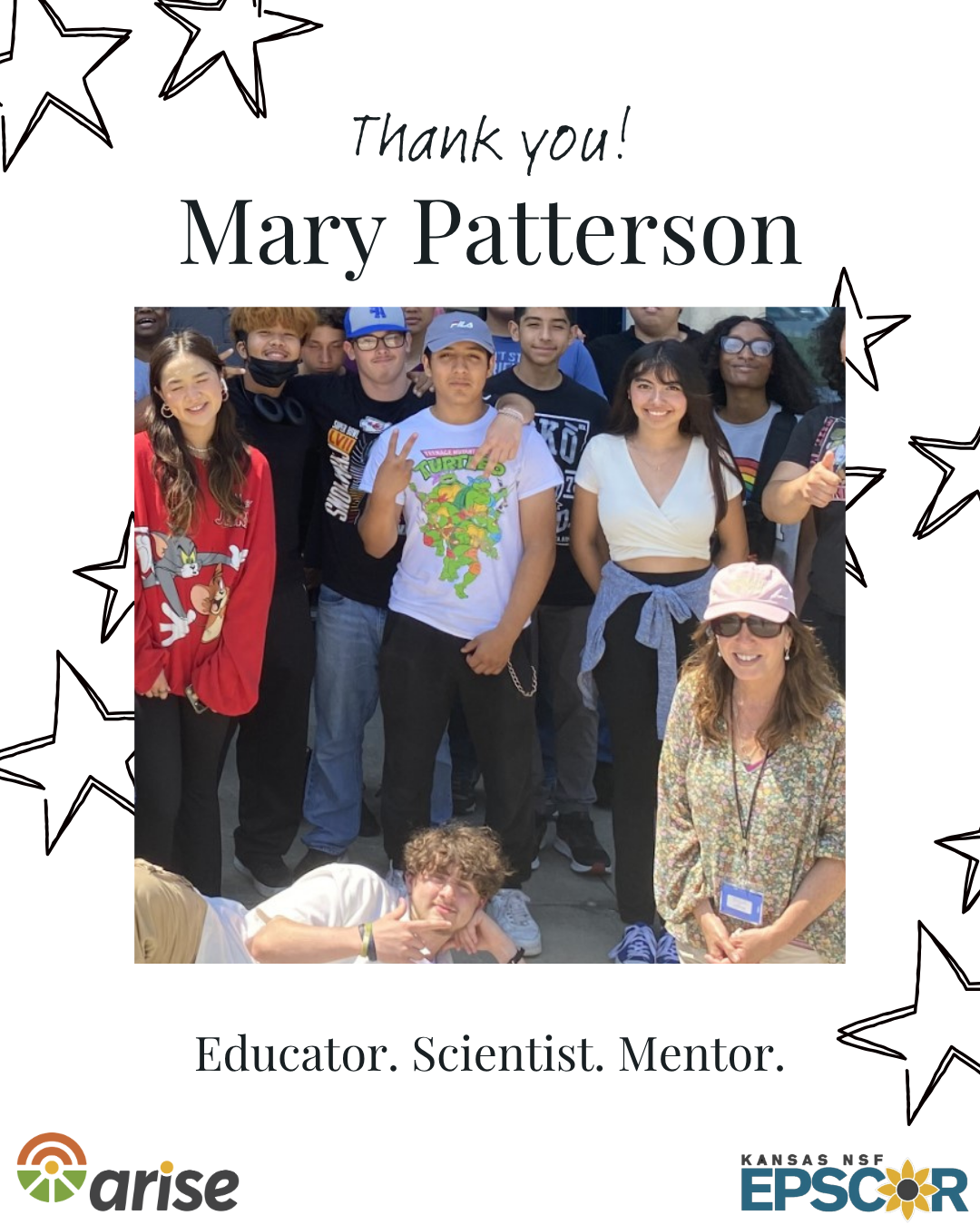
Mary Patterson got her first microscope at age 7—and never looked back. From peering at pond water as a kid to teaching at Kansas City Kansas Community College (KCKCC), her love for science has only grown.
But where her heart really shines is at Saturday Academy. Patterson has taught for this out-of-school program for more than 20 years, enriching the lives of thousands of teenagers in Kansas City, Kans. In 2022 Patterson began overseeing funding for the academy from the ARISE project, a U.S. National Science Foundation Established Program to Stimulate Competitive Research (NSF EPSCoR).
Patterson explains her career path in the interview below with University of Kansas Freshman Joshua Alston. Their conversation has been edited for clarity and brevity.
Interview
Q: What is your role?
A: I am an adjunct professor at Kansas City Kansas Community College. I teach biology and chemistry and sometimes biochemistry. I’m also an instructor for the Saturday Academy program, which meets every other Saturday at the community college. We have about 110 middle and high school level students from the KCK school district, and we do science and math with them.
Q: Where did you study?
A: I majored in agriculture at Kansas State University, and then I got my PhD in biochemistry from UMKC.
Q: Why did you choose science?
A: My parents gave me a microscope when I was about seven, and I was just obsessed with the microscope and with science and collecting rocks and things like that. So, I majored in horticulture agriculture, but the jobs weren't what I wanted, and I really wanted to do research. My dissertation research was on the packaging of a virus protein.
Q: What got you into research? And what was your experience like?
A: I remember when I first looked in a microscope and found out where this protein went in the cell, I thought, ‘I'm the first person in the history of the world to see this.’ It's just the curiosity of it. There's always something new.
Q: I've never thought about it that way! What got you into teaching?
A: I mostly teach online. I have a daughter, and I like the flexibility of working from home. I enjoy teaching at Saturday Academy, because the kids are just wonderful. We get to do all sorts of labs and hands-on activities; the kids just love it. And they are just as curious as I am!
Q: At the Saturday Academy what is your favorite activity that you do?
A: We are studying electrical infrastructure this year. The students learned how electricity is made with wind turbines, steam engines, and solar power. I like hands-on activities, because the students at our school district don't get a lot of that.
Q: How did you get connected with the NSF-funded ARISE program?
A: My dean, Dr. Ed Kramer, introduced me to the program. He asked me to be the principal investigator for KCKCC's subcontract since I had taught at Saturday Academy for over 20 years.
Q: What has been your main takeaway from this program and being able to be in this leadership position?
A: My main takeaway is that there are a lot of young people that want to learn, who are very serious about their education. It’s been fulfilling following those young people from eighth grade to seniors through college. Many even come back and teach in our program — 75% of our teachers have gone through our program as students! We have doctors and engineers. That's what's fulfilling, to see them grow and apply to college; it’s been so rewarding.
Q: What do you think is the legacy of NSF?
A: Most companies will not fund the research that the National Science Foundation funds because they wouldn't be able to make money from it. But we need that fundamental research to understand how things work, and the education to train the next generation of scientists to keep the research going so that we can have things like the COVID vaccine, ready within five months of the pandemic. That's why NSF is very important.